Comfort (1888-1942 W. H. Gannett) comic books
-
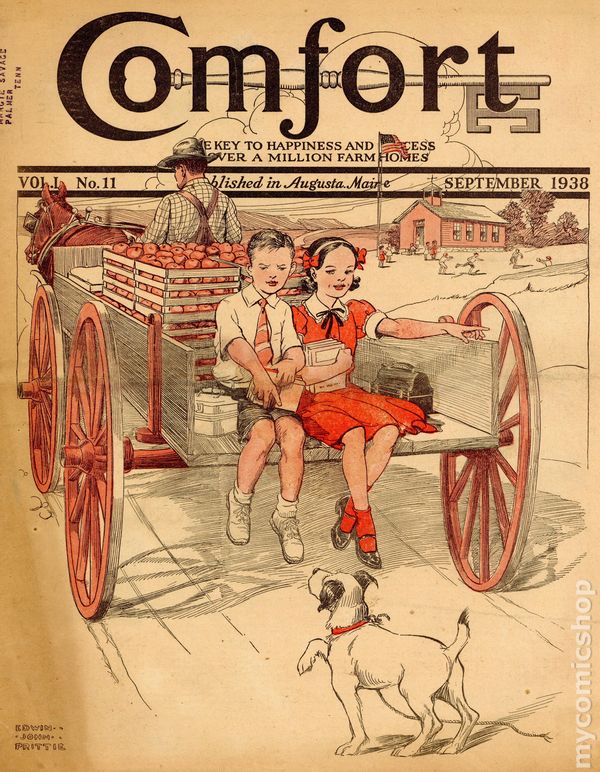
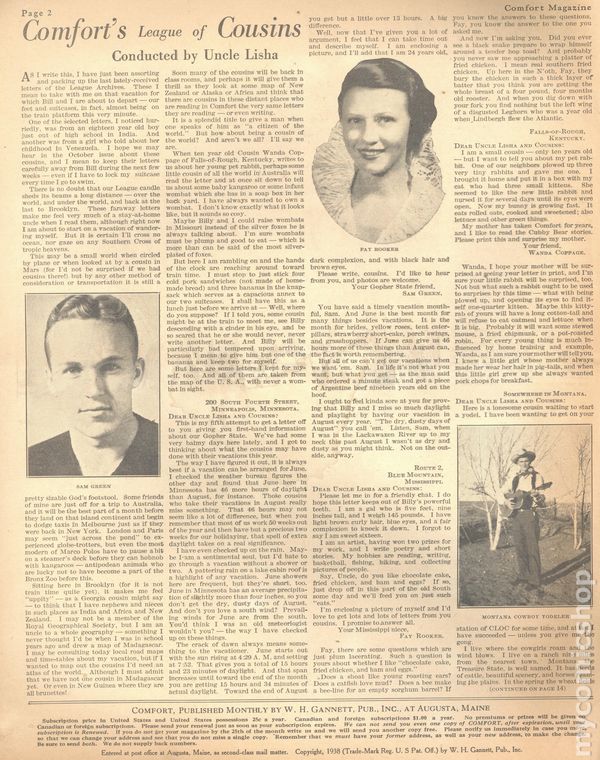
Comfort (1888-1942 W. H. Gannett) Vol. 1 #11$8.00
View scans- Multiple heavy spine breaks. Moderate spine roll. 1/2" edge tears to multiple pages. Spine split 10%. Staple rust: Slight.
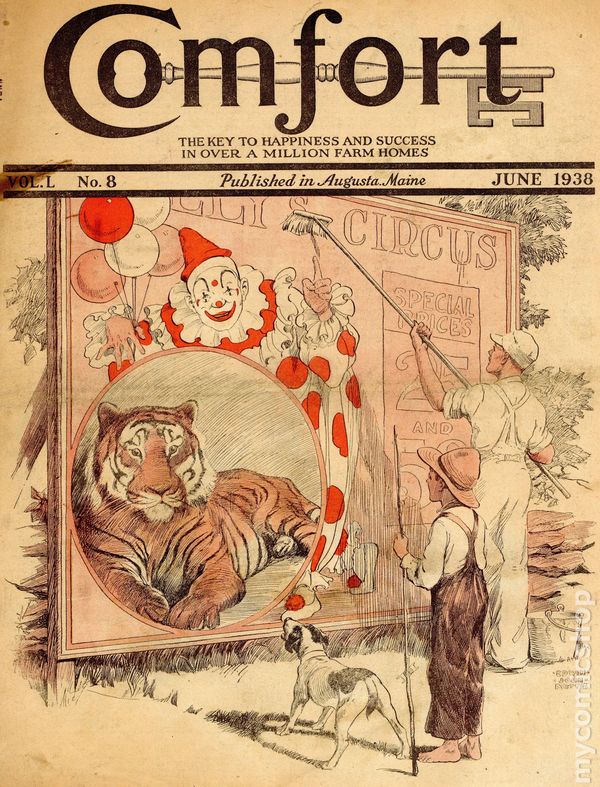
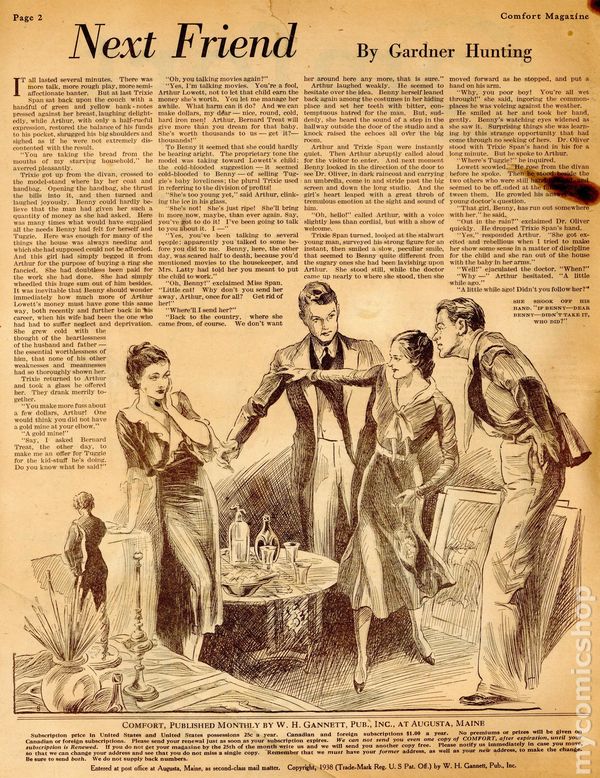
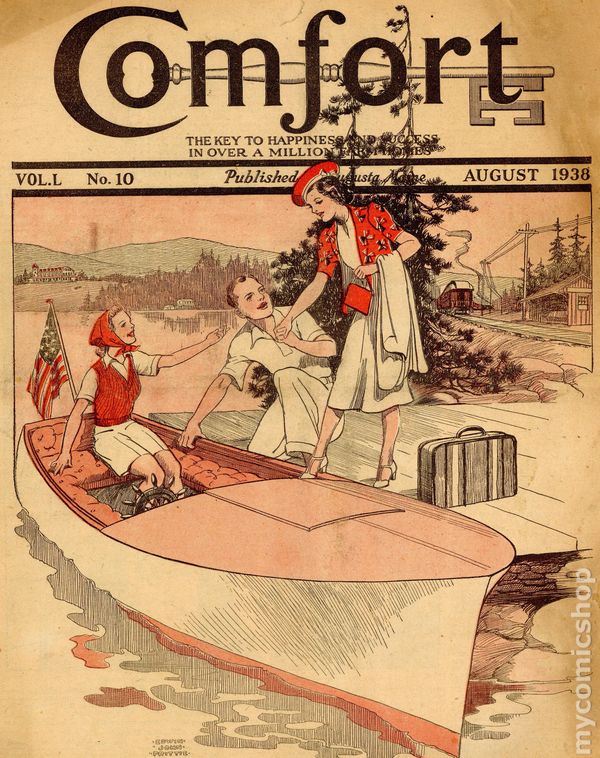
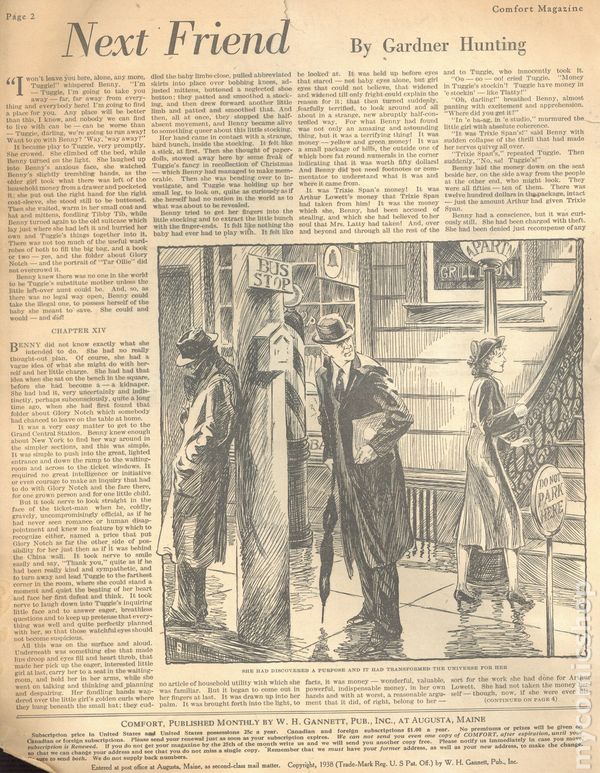
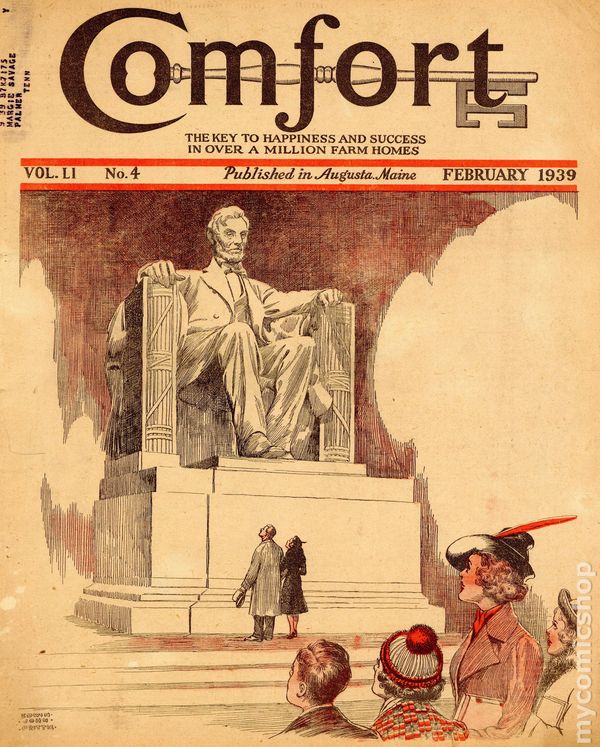
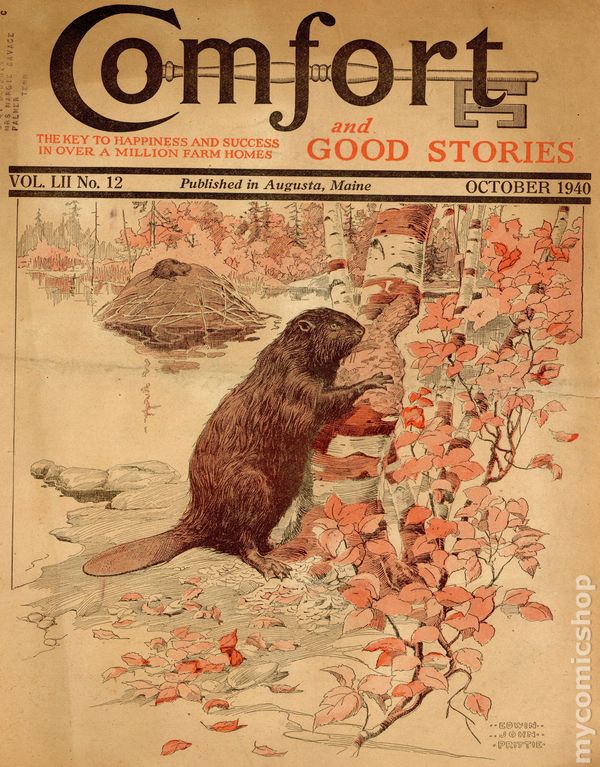
Mail order magazine, edited initially by William H. Gannet. In 1888, Gannet created Comfort primarily as a means to advertise his patent medicine, Giant Oxien, a variant of The Moxie Nerve Food. Comfort's circulation increased from 13,000, in 1888, to 1.3 million, in 1894, which made Comfort the first publication in America to reach a circulation of 1 million. 10.5" x 13", 20 pages, B&W.
-
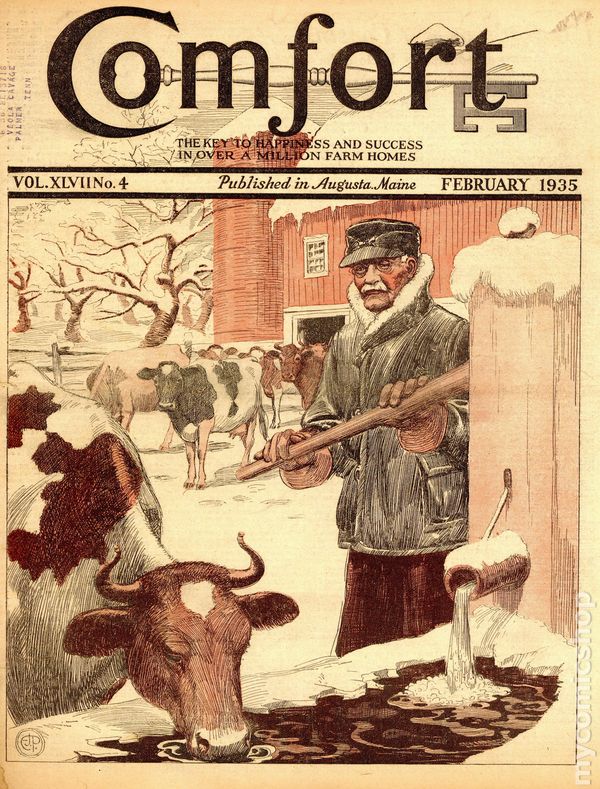
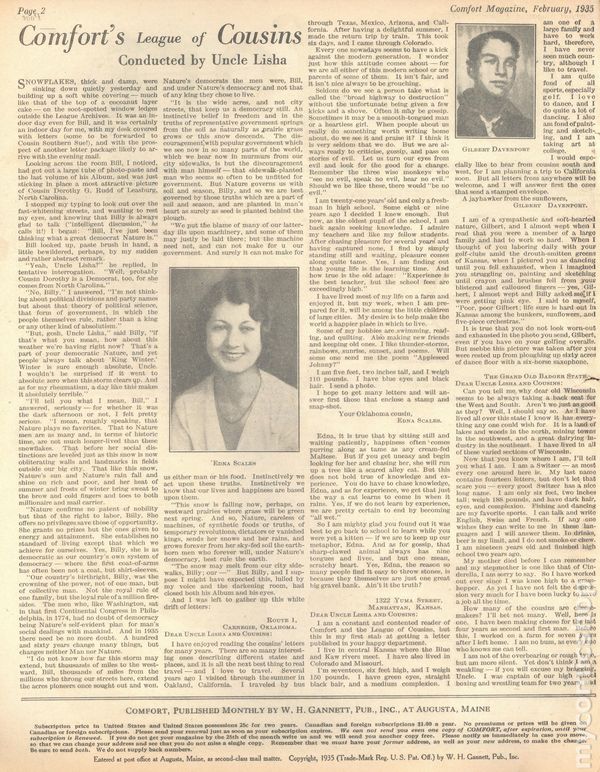
Comfort (1888-1942 W. H. Gannett) Vol. 47 #4$8.00
View scans- Heavy spine break. Heavy edge abrading to multiple pages. Spine split 10%. Water damage: Slight. Staple rust: Slight.
Mail order magazine, edited initially by William H. Gannet. In 1888, Gannet created Comfort primarily as a means to advertise his patent medicine, Giant Oxien, a variant of The Moxie Nerve Food. Comfort's circulation increased from 13,000, in 1888, to 1.3 million, in 1894, which made Comfort the first publication in America to reach a circulation of 1 million. 10.5" x 13", 32 pages, B&W.
-
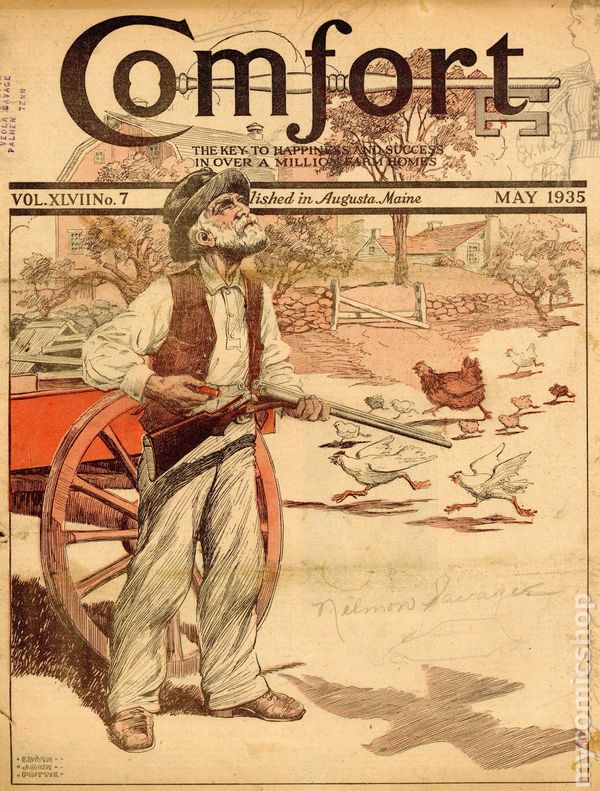
Comfort (1888-1942 W. H. Gannett) Vol. 47 #7$8.00
View scans- Multiple heavy spine breaks. Pencil throughout. Moderate edge abrading to multiple pages. Spine split 10%. Water damage: Slight. Staple rust: Slight.
Mail order magazine, edited initially by William H. Gannet. In 1888, Gannet created Comfort primarily as a means to advertise his patent medicine, Giant Oxien, a variant of The Moxie Nerve Food. Comfort's circulation increased from 13,000, in 1888, to 1.3 million, in 1894, which made Comfort the first publication in America to reach a circulation of 1 million. 10.5" x 13", 20 pages, B&W.
-
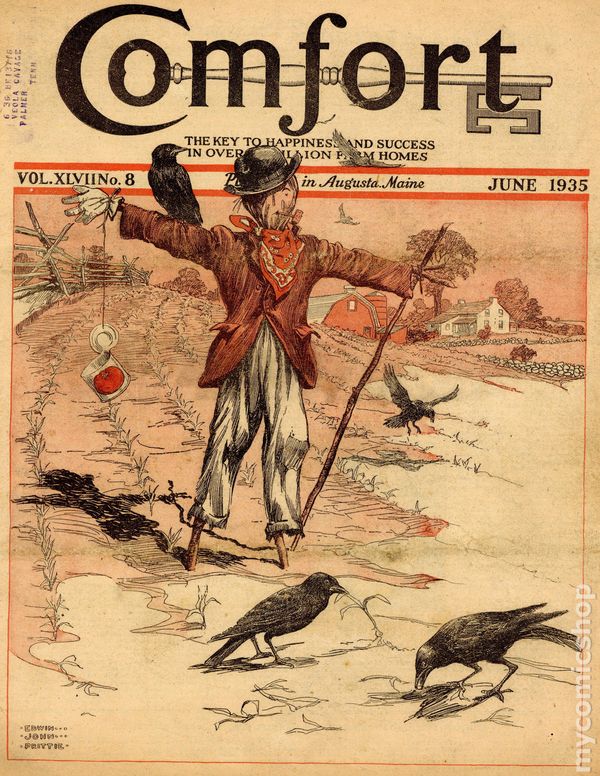
Comfort (1888-1942 W. H. Gannett) Vol. 47 #8$8.00
View scans- Heavy spine roll. Multiple heavy spine breaks. Heavy edge abrading to pages. Water damage: Moderate. Staple rust: Slight.
Mail order magazine, edited initially by William H. Gannet. In 1888, Gannet created Comfort primarily as a means to advertise his patent medicine, Giant Oxien, a variant of The Moxie Nerve Food. Comfort's circulation increased from 13,000, in 1888, to 1.3 million, in 1894, which made Comfort the first publication in America to reach a circulation of 1 million. 10.5" x 13", 20 pages, B&W.
-
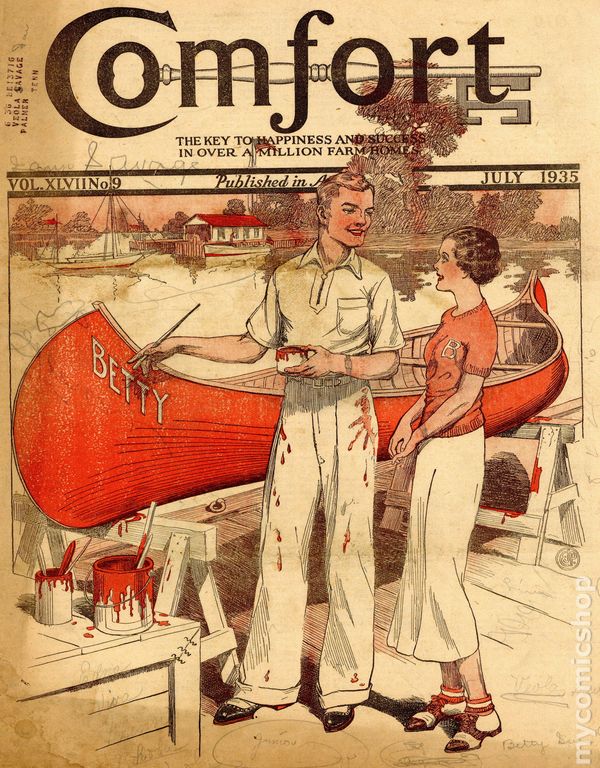
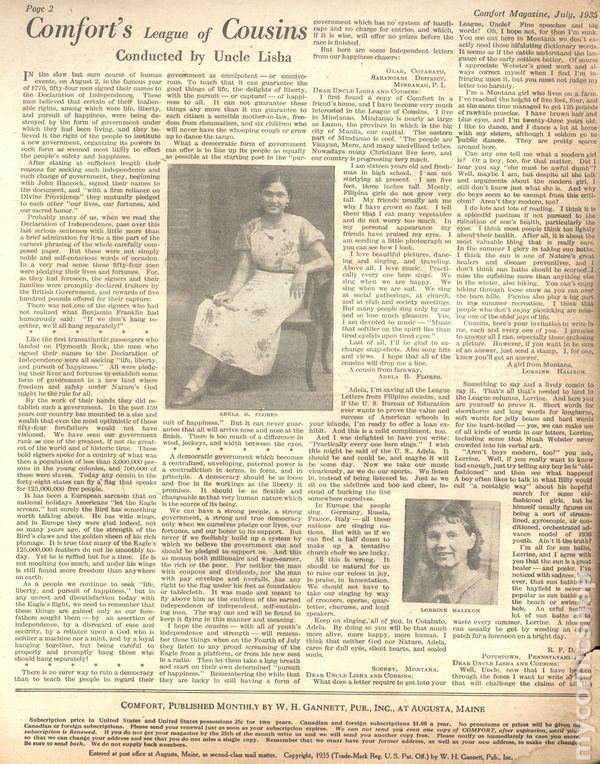
Comfort (1888-1942 W. H. Gannett) Vol. 47 #9
- Pencil notations throughout. Spine split 40%. Water damage: Slight. Staple rust: Slight.
Mail order magazine, edited initially by William H. Gannet. In 1888, Gannet created Comfort primarily as a means to advertise his patent medicine, Giant Oxien, a variant of The Moxie Nerve Food. Comfort's circulation increased from 13,000, in 1888, to 1.3 million, in 1894, which made Comfort the first publication in America to reach a circulation of 1 million. 10.5" x 13", 20 pages, B&W.
-
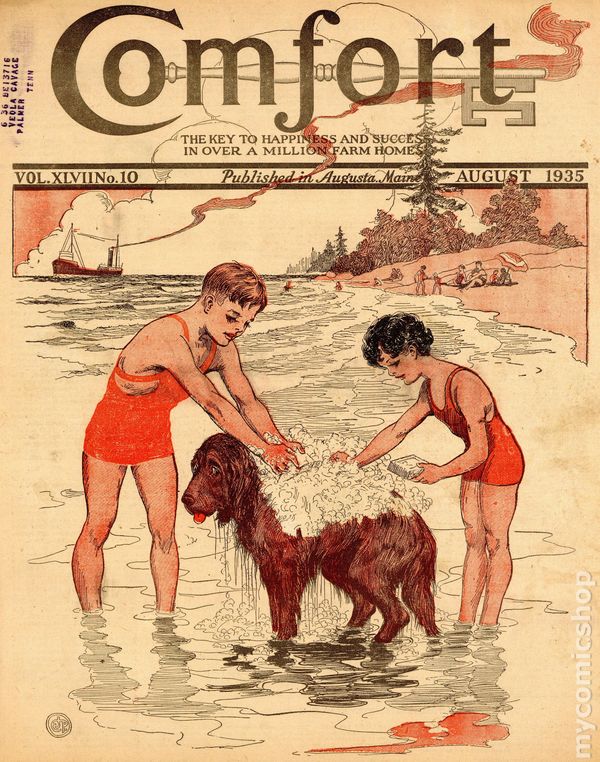
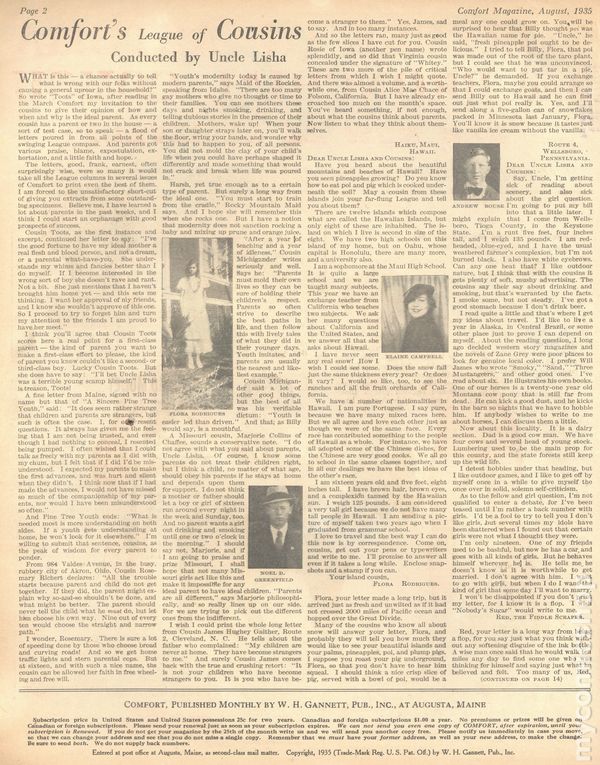
Comfort (1888-1942 W. H. Gannett) Vol. 47 #10$10.00
View scans- 1" cut through front cover and multiple pages. Slight chewing and abrading to multiple pages. Multiple moderate spine breaks. Water damage: Slight. Staple rust: Slight.
Mail order magazine, edited initially by William H. Gannet. In 1888, Gannet created Comfort primarily as a means to advertise his patent medicine, Giant Oxien, a variant of The Moxie Nerve Food. Comfort's circulation increased from 13,000, in 1888, to 1.3 million, in 1894, which made Comfort the first publication in America to reach a circulation of 1 million. 10.5" x 13", 20 pages, B&W.
-
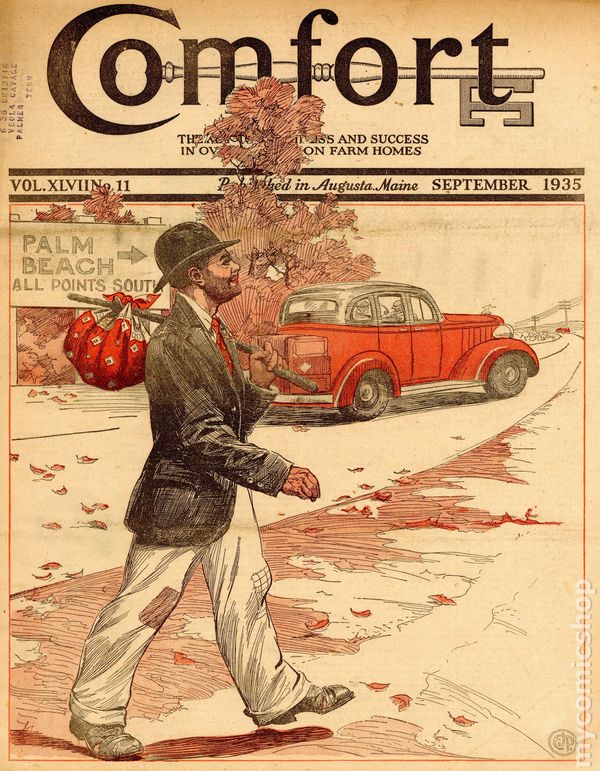
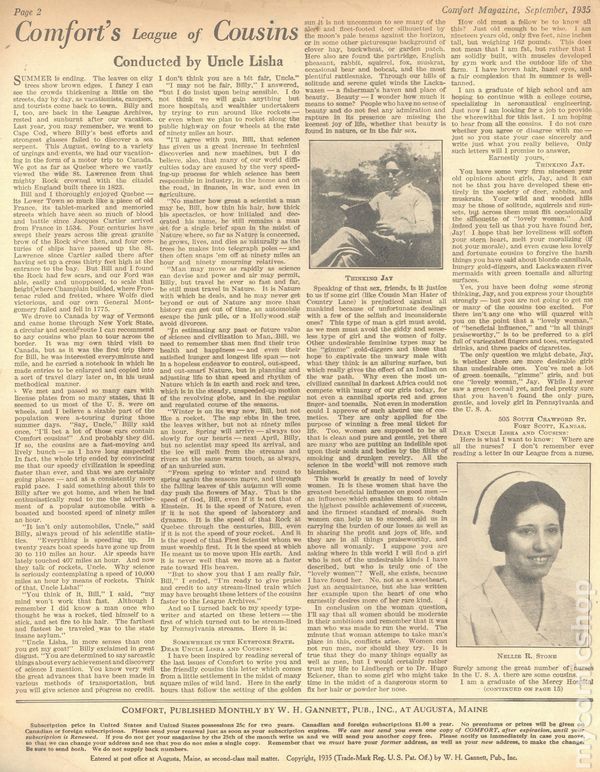
Comfort (1888-1942 W. H. Gannett) Vol. 47 #11
- Multiple heavy spine breaks. Heavy spine roll. Centerfold detached at one staple. Edge tears and abrading to multiple pages. Spine split 10%. Water damage: Slight. Staple rust: Slight.
Mail order magazine, edited initially by William H. Gannet. In 1888, Gannet created Comfort primarily as a means to advertise his patent medicine, Giant Oxien, a variant of The Moxie Nerve Food. Comfort's circulation increased from 13,000, in 1888, to 1.3 million, in 1894, which made Comfort the first publication in America to reach a circulation of 1 million. 10.5" x 13", 20 pages, B&W.
-
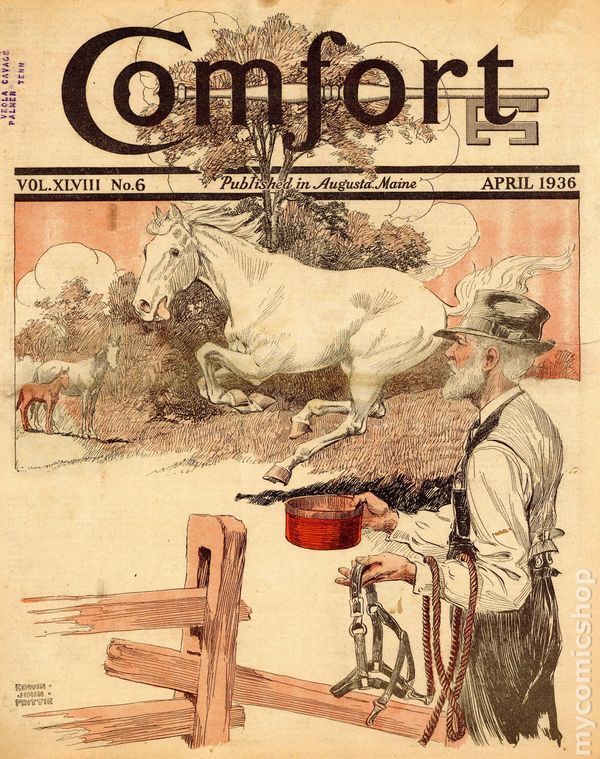
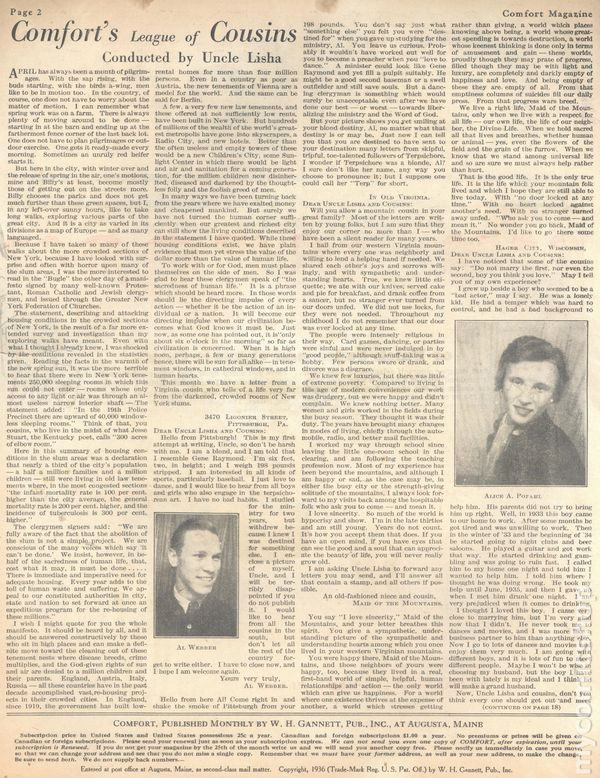
Comfort (1888-1942 W. H. Gannett) Vol. 48 #6$10.00
View scans- Missing one staple. Pencil notations to multiple pages. Spine split 5%. Water damage: Slight.
Mail order magazine, edited initially by William H. Gannet. In 1888, Gannet created Comfort primarily as a means to advertise his patent medicine, Giant Oxien, a variant of The Moxie Nerve Food. Comfort's circulation increased from 13,000, in 1888, to 1.3 million, in 1894, which made Comfort the first publication in America to reach a circulation of 1 million. 10.5" x 13", 24 pages, B&W.
-
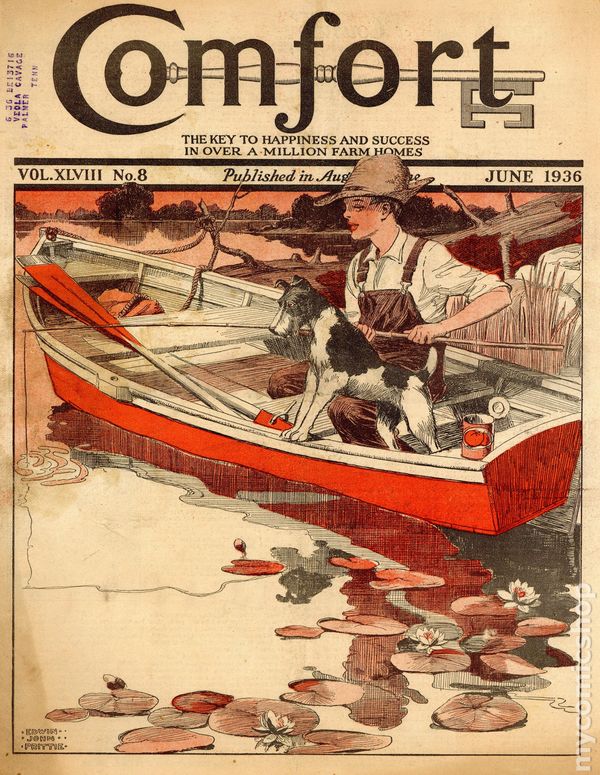
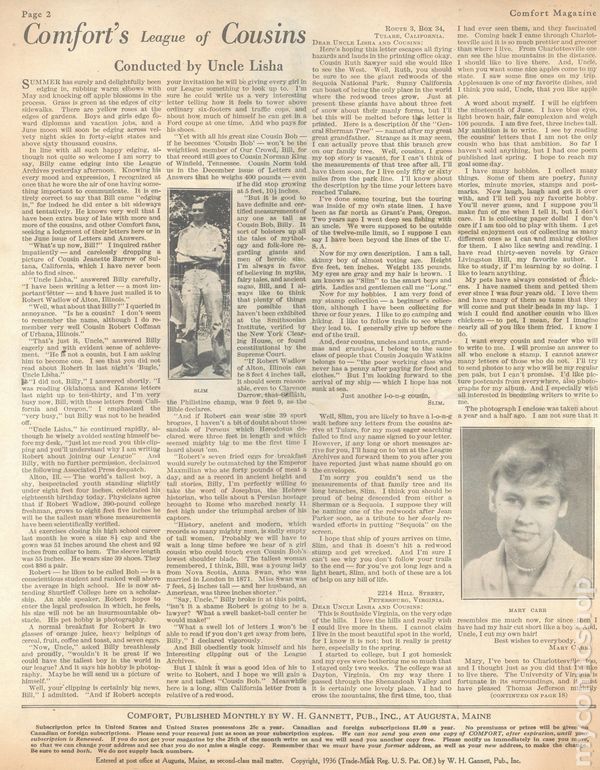
Comfort (1888-1942 W. H. Gannett) Vol. 48 #8$10.00
View scans- Heavy spine break. Spine split 5%. Water damage: Moderate. Staple rust: Slight.
Mail order magazine, edited initially by William H. Gannet. In 1888, Gannet created Comfort primarily as a means to advertise his patent medicine, Giant Oxien, a variant of The Moxie Nerve Food. Comfort's circulation increased from 13,000, in 1888, to 1.3 million, in 1894, which made Comfort the first publication in America to reach a circulation of 1 million. 10.5" x 13", 20 pages, B&W.
-
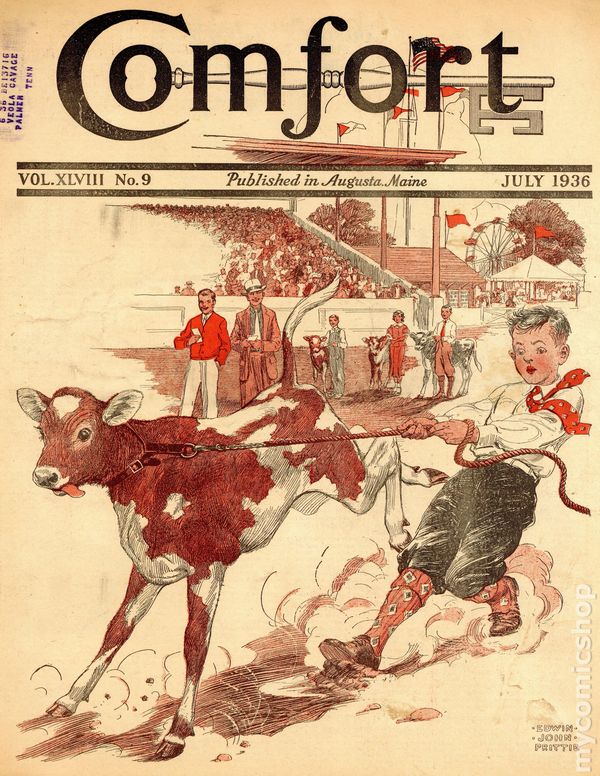
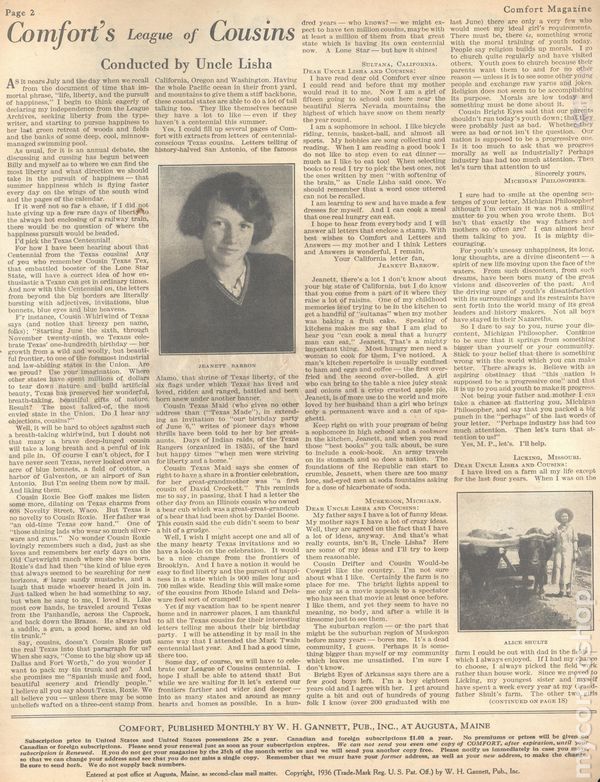
Comfort (1888-1942 W. H. Gannett) Vol. 48 #9$10.00
View scans- One staple removed. Spine split 10%. Water damage: Slight. Staple rust: Slight.
Mail order magazine, edited initially by William H. Gannet. In 1888, Gannet created Comfort primarily as a means to advertise his patent medicine, Giant Oxien, a variant of The Moxie Nerve Food. Comfort's circulation increased from 13,000, in 1888, to 1.3 million, in 1894, which made Comfort the first publication in America to reach a circulation of 1 million. 10.5" x 13", 20 pages, B&W.
-
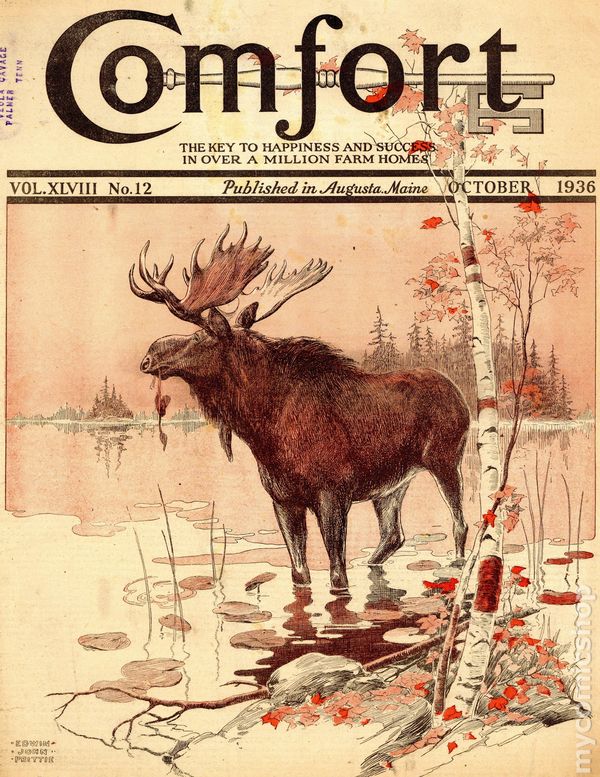
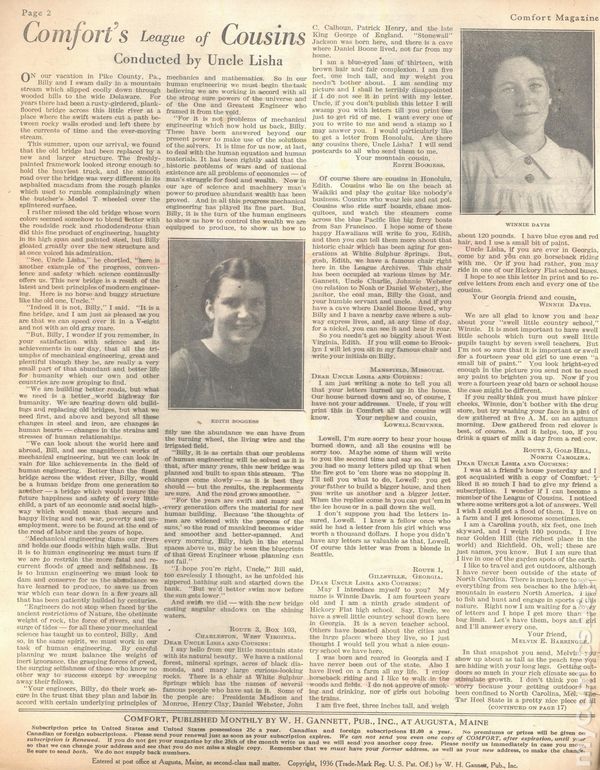
Comfort (1888-1942 W. H. Gannett) Vol. 48 #12$10.00
View scans- Multiple heavy spine breaks. Corner creasing and edge tears to multiple pages. Spine split 5%. Water damage: Slight. Staple rust: Slight.
$10.00
View scans- Heavy spine break. Spine split 5%. Water damage: Slight. Staple rust: Slight.
Mail order magazine, edited initially by William H. Gannet. In 1888, Gannet created Comfort primarily as a means to advertise his patent medicine, Giant Oxien, a variant of The Moxie Nerve Food. Comfort's circulation increased from 13,000, in 1888, to 1.3 million, in 1894, which made Comfort the first publication in America to reach a circulation of 1 million. 10.5" x 13", 24 pages, B&W.
-
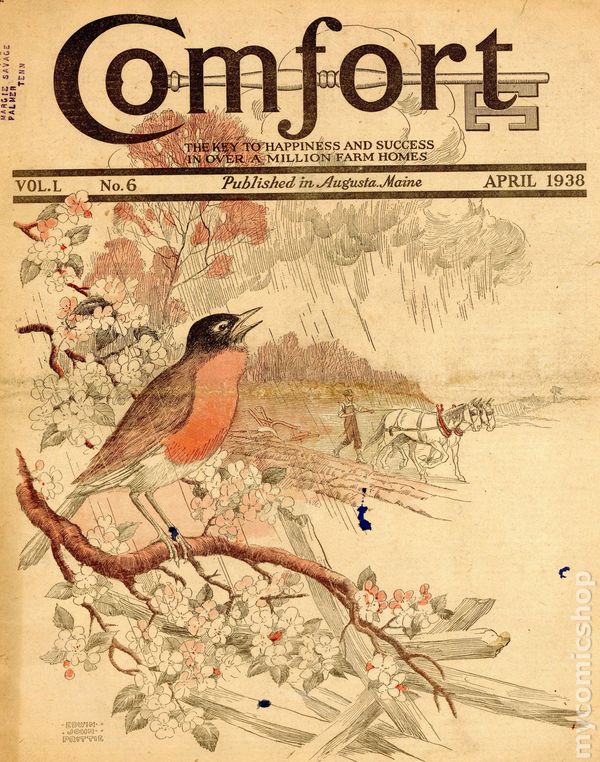
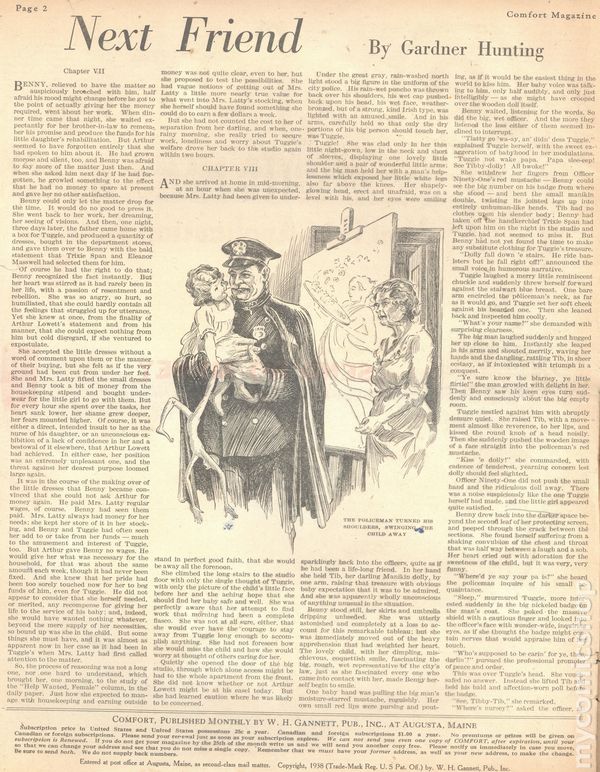
Comfort (1888-1942 W. H. Gannett) Vol. 50 #6$8.00
View scans- Heavy spine stress. Staining to front cover, affecting following page. Heavy edge tearing and abrading to multiple pages. Spine split 5%. Water damage: Slight. Staple rust: Slight.
Mail order magazine, edited initially by William H. Gannet. In 1888, Gannet created Comfort primarily as a means to advertise his patent medicine, Giant Oxien, a variant of The Moxie Nerve Food. Comfort's circulation increased from 13,000, in 1888, to 1.3 million, in 1894, which made Comfort the first publication in America to reach a circulation of 1 million. 10.5" x 13", 20 pages, B&W.
-
Comfort (1888-1942 W. H. Gannett) Vol. 50 #8$8.00
View scans- Multiple stains, affecting covers and pages. Spine split 20%. Water damage: Slight. Staple rust: Slight.
Mail order magazine, edited initially by William H. Gannet. In 1888, Gannet created Comfort primarily as a means to advertise his patent medicine, Giant Oxien, a variant of The Moxie Nerve Food. Comfort's circulation increased from 13,000, in 1888, to 1.3 million, in 1894, which made Comfort the first publication in America to reach a circulation of 1 million. 10.5" x 13", 16 pages, B&W.
-
Comfort (1888-1942 W. H. Gannett) Vol. 50 #10
- One staple removed. Corner creasing and chipping to multiple pages. Spine split 10%. Water damage: Slight.
Mail order magazine, edited initially by William H. Gannet. In 1888, Gannet created Comfort primarily as a means to advertise his patent medicine, Giant Oxien, a variant of The Moxie Nerve Food. Comfort's circulation increased from 13,000, in 1888, to 1.3 million, in 1894, which made Comfort the first publication in America to reach a circulation of 1 million. 10.5" x 13", 16 pages, B&W.
-
Comfort (1888-1942 W. H. Gannett) Vol. 51 #4$10.00
View scans- Moderate spine roll. Water spotting. Corner creasing and edge tears to multiple pages. Spine split 5%. Water damage: Slight. Staple rust: Slight.
Mail order magazine, edited initially by William H. Gannet. In 1888, Gannet created Comfort primarily as a means to advertise his patent medicine, Giant Oxien, a variant of The Moxie Nerve Food. Comfort's circulation increased from 13,000, in 1888, to 1.3 million, in 1894, which made Comfort the first publication in America to reach a circulation of 1 million. 10.5" x 13", 24 pages, B&W.
-
Comfort (1888-1942 W. H. Gannett) Vol. 52 #12$10.00
View scans- Fore-edge tears to all with 3" tear to front cover. Spine split 10%. Staple rust: Slight.
Mail order magazine, edited initially by William H. Gannet. In 1888, Gannet created Comfort primarily as a means to advertise his patent medicine, Giant Oxien, a variant of The Moxie Nerve Food. Comfort's circulation increased from 13,000, in 1888, to 1.3 million, in 1894, which made Comfort the first publication in America to reach a circulation of 1 million. 10.5" x 13", 12 pages, B&W.
-
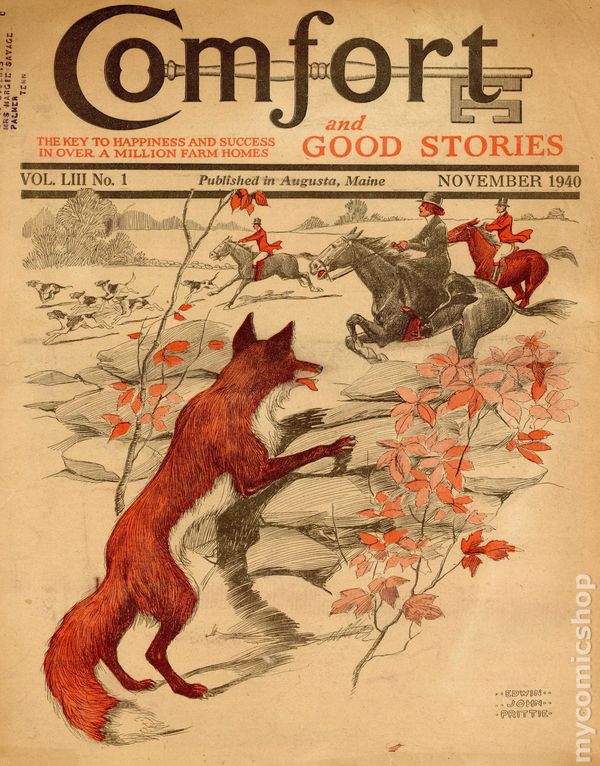
Comfort (1888-1942 W. H. Gannett) Vol. 53 #1$6.00
View scans- Heavy spine break. Spine split 15%. Coupon/Piece missing, story affected.
Mail order magazine, edited initially by William H. Gannet. In 1888, Gannet created Comfort primarily as a means to advertise his patent medicine, Giant Oxien, a variant of The Moxie Nerve Food. Comfort's circulation increased from 13,000, in 1888, to 1.3 million, in 1894, which made Comfort the first publication in America to reach a circulation of 1 million. 10.5" x 13", 12 pages, B&W.
-
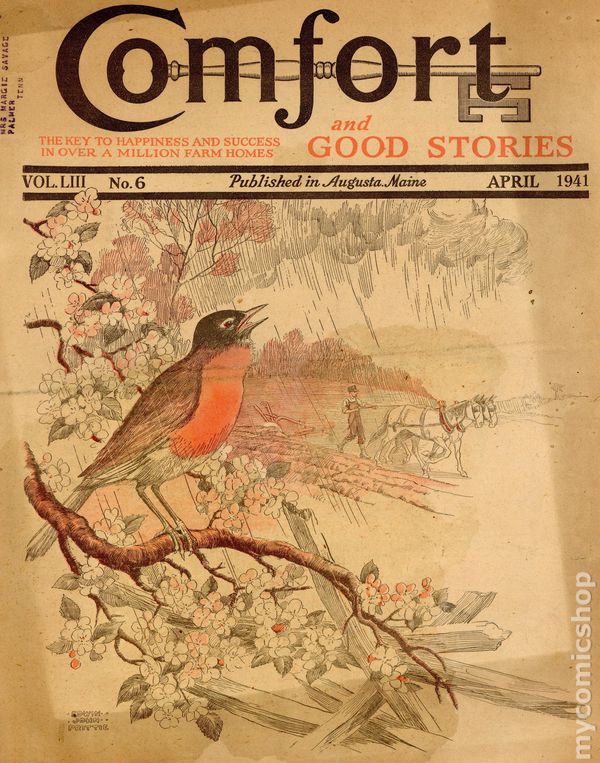
Comfort (1888-1942 W. H. Gannett) Vol. 53 #6$6.00
View scans- Cover Detached. Coupon/Piece missing, story affected. Staple rust: Slight.
Mail order magazine, edited initially by William H. Gannet. In 1888, Gannet created Comfort primarily as a means to advertise his patent medicine, Giant Oxien, a variant of The Moxie Nerve Food. Comfort's circulation increased from 13,000, in 1888, to 1.3 million, in 1894, which made Comfort the first publication in America to reach a circulation of 1 million. 10.5" x 13", 12 pages, B&W.